

A purple flower with a blue background

Hanako Hashiguchi

A little about me.

Skills

  • HTML5
  • CSS3 & SASS
  • JavaScript
  • React.js
  • VSCode
  • JSON Server
  • Git & GitHub

Projects

Happy Analytics

Happy Analytics

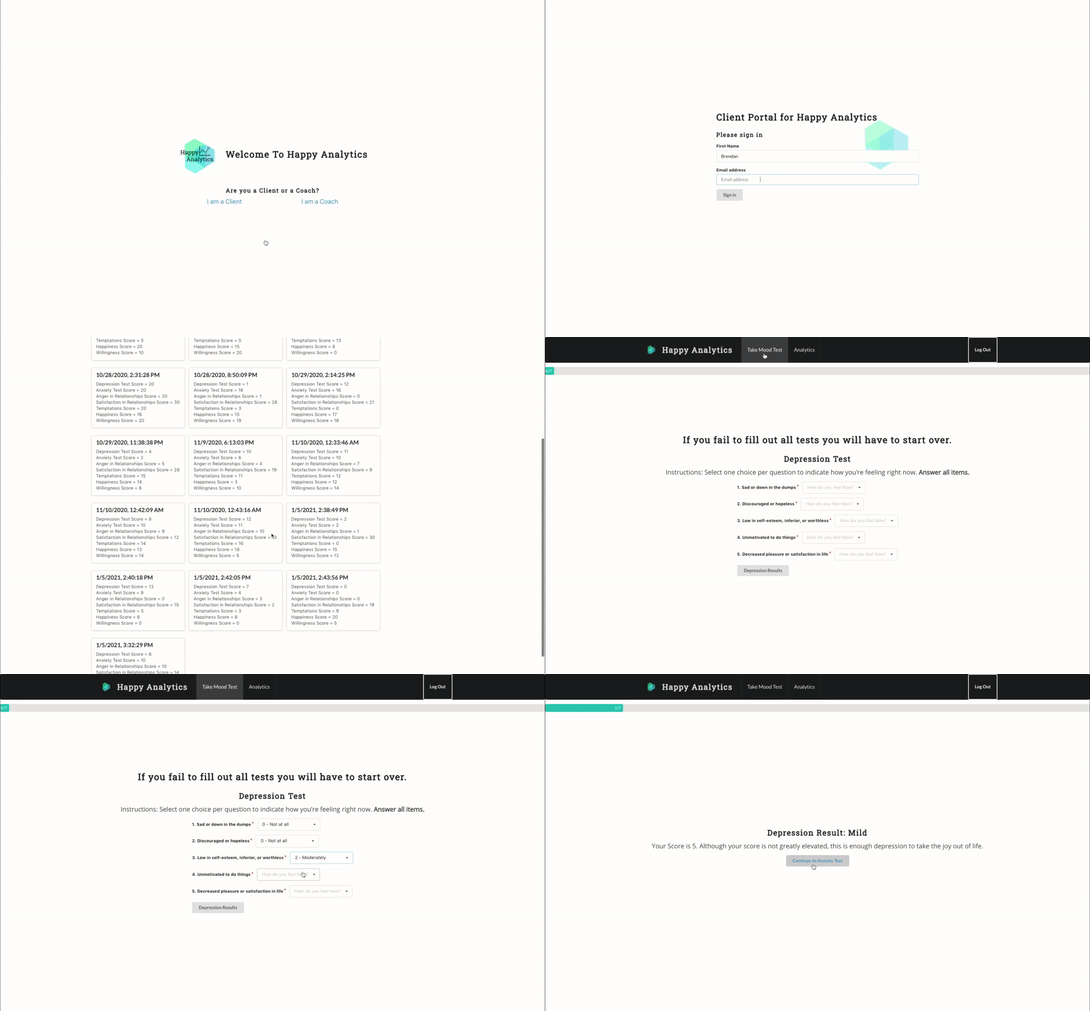
Happy Analytics is a web application that makes it easy to track moods which assist the user, with the help of their therapist, to improve their moods over time.

Problem Statement

Inner Solutions noticed their clients were having a hard time keeping up with their mood journals and ultimately stopped trying to keep track altogether. This made it difficult for clients and their coaches to see their progress and continue to be motivated towards improvement. With little progress being recognized, clients were deciding to stop their sessions with Inner Solutions.

How might we help health coaches and their clients track their clients’ moods to study trends in their mental health and continue to be motivated?

Users and Audience

There are two main users of this app: Health coaches and their clients.

Roles and Responsibilities

I was the sole programmer and designer for this project.

Scope and Constraints

This project was completed in 2 weeks and was the first app I created, designed, and coded solo. Being built in React and implementing Semantic-Ui both of which were new technologies to me two weeks prior also made for a challenge.

Process

It began with a conversation about how hard it is to get clients to consistently complete their mood journals and brainstorming ways to help make the process easier for them. We learned early on that the biggest pain point for most users was not having a consistent format to fill out and also needed to sit down with pen and paper for each mood journal entry. From there, I decided the best way to solve this problem was to create a web app that would be able to be filled out quickly, accurately, and with a set number of consistent questions.

I then began the initial wireframes and also the logo and color scheme. I chose to have a very minimal layout with cool teal tones to produce a calming yet clinical feel. To be able to have admins and users recognized as separate entities I decided to make two differing login pages, one for the coaches and the other for their clients.

Client confidentiality was one of the highest priorities along with usability so making sure the client had trust in the final product along with not getting frustrated and quitting was of the utmost importance. Knowing this, I made sure that there were no unnecessary features and focused on keeping the user engaged throughout the mood journal process with features like a progress bar and small messages of encouragement sprinkled around to delight and surprise them. Keeping in mind that these particular users struggle with anxiety and depression I made sure to use a research-backed mood tracking template that requires no written answers only multiple-choice questions.

The final piece I was able to implement was creating a graph that displays and tracks the user’s happiness over time.

Outcomes and Lessons

This project was particularly difficult because of my limited time getting comfortable with React along with designing and building all of this in 2 weeks. It showed me how quickly I can iterate on an idea and reach the minimum viable product (MVP). The biggest lesson I learned was planning was valuable but I should have allocated more time to researching my design library of choice (Semantic-UI) and Chart.js which created my line graphs.

If I had more time I would have implemented more graphs for the other pieces of data and also added, even more, pauses between mood form pages to decrease decision fatigue.
Overall I loved working on this project because this is my partner’s business and I know from personal experience that tracking one’s mood is a great way to track and celebrate the small wins. The ones only you can see and get excited about. The ones that ultimately change your life in a big way.

Shop the Streets

Shop the Streets

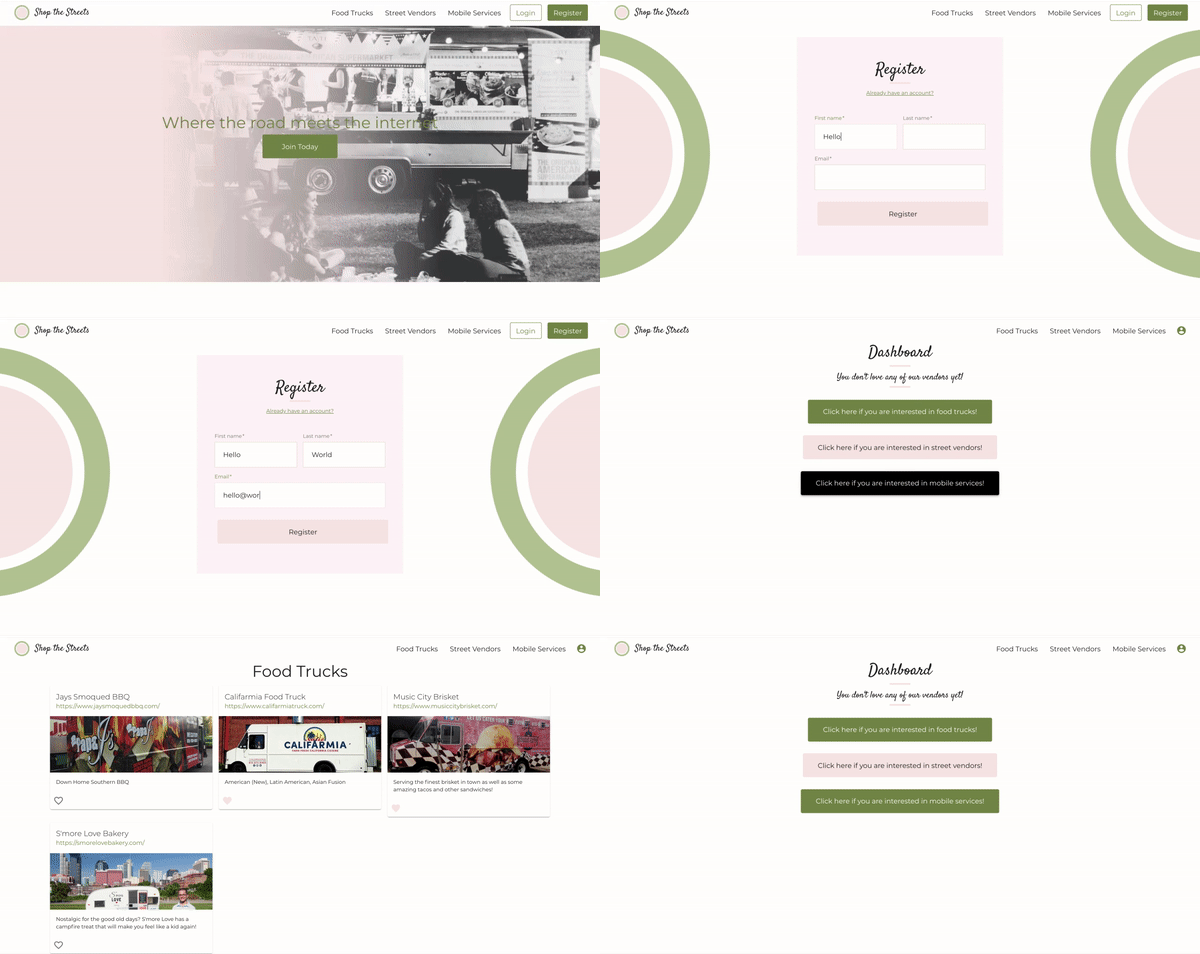
Shop the Streets is a fun way to discover street vendors who may need help reaching new audiences during the pandemic.

Problem Statement

Many truck vendors have been deeply impacted this past year by the global pandemic. Food trucks that previously got most of their revenue through large-scale events must now adapt to survive. Street vendors that used to rely on particularly dense tourist areas have seen a steady decrease in foot traffic which translates to a decrease in sales as well. Mobile services that involve someone coming into your home have also seen a faltering in sales due to fear of transmission.

How might we engage our local population to support the small businesses that become forgotten due to their mobile nature?

Users and Audience

Anyone who has or would be interested in supporting small businesses. This audience is usually found in the early majority of the innovation adoption cycle.

Roles and Responsibilities

I was the sole programmer and designer for this project.

Scope and Constraints

This project was completed in a 3 week time period and was the first app with dedicated user research. I worked with the Material UI style library which proved to have a slightly steeper learning curve than I anticipated.

Process

I began by conducting user research to determine if there was any interest in street vendors within our local community. When the results came back overwhelmingly positive I decided that I would move forward with my plan to create an app to support them.

Quick wireframing ensued but because of my time constraints, I decided to scale back my MVP to only include the very basics so I could focus more on design. I then quickly moved on to data structure and prototyping. For my logo and color palette, I chose bright pastels to drive away gloom and to reiterate hope and vivacity. Breaking the vendors into 3 main categories made it easy to navigate quickly and effortlessly. My biggest challenge was implementing heart checkboxes on all of the vendor cards and creating a new array within my data structure.

Outcomes and Lessons

During my research phase, I did find a few apps that track food trucks specifically and discovered features I loved (map tracking, ability to order food online, and hire them outright). However, the usability and the way the food trucks were presented left me wanting more. I am eager to continue working on styling and possibly implementing an ‘add’ feature for new vendors.

A lesson that I learned multiple times over the course of this project was; Respect your foundations. Getting crystal clear on the flow of information through my app along with gaining a better understanding of React was the base I needed to succeed. I also learned Nashvillians really love their food trucks and love supporting their fellow neighbors.

Experience

Nashville Software School - UX/UI Designer and Front-End Developer Apprentice

August 2020 - February 2021
• Built single page applications with HTML5, CSS3, SASS, JavaScript, React.js
• Created user personas, completed wireframes and made high-fidelity prototypes
• Worked within groups completely remotely while meeting MVP and with time constraints in place
• Git and Github for version control alone and within teams

The Horton Group - Web Development Project Manager

November 2018 - May 2019
• Lead discovery meetings and translate client needs to a final website
• Tracked the life cycle of an online project through proposal stage, technical research, and scope, to final delivery
• Took on fresh and unproven tasks in order to develop new ideas within our company

Education

Nashville Software School - Nashville, TN

• Software Development Bootcamp – Certificate

St. John's College - Annapolis, MD

• Attended 2015 - 2017